Back pain massage guide
What Kind of Massage Should I Book If My Back Hurts?
A practical guide to choosing deep tissue, trigger point, sports massage, and session length when your back feels tight, sore, or overworked.
By Chris Cox, LMTPublished Updated
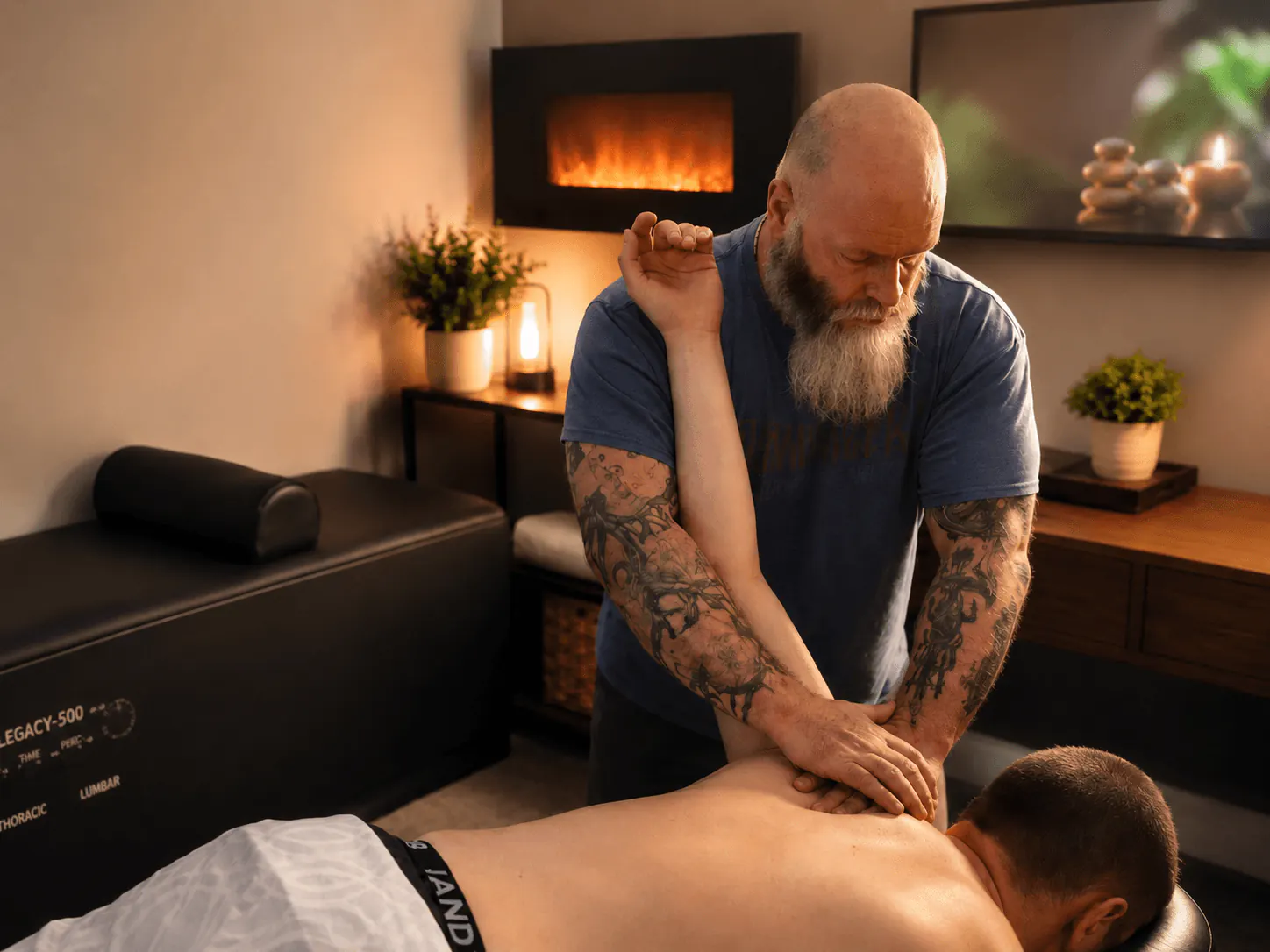
Back pain is one of those problems that can make everything annoying.
Sitting is annoying. Standing is annoying. Getting in the car is annoying. Sleeping gets weird. You bend over to grab something small and suddenly you're making old-man noises in a Target aisle.
When your back hurts, it's normal to wonder what kind of massage you should book. Deep tissue? Trigger point? Sports massage? A full-body session? Thirty minutes because you're just trying it, or ninety minutes because your back has clearly filed a formal complaint?
The honest answer is this: it depends on what kind of back pain you're dealing with, how long it's been going on, how many areas feel involved, and whether the issue feels muscular or like something that needs medical attention.
Massage can be a good fit when your back feels tight, overworked, stiff, or sore from stress, posture, physical work, training, or everyday wear and tear. Mayo Clinic notes that massage can help when back pain is caused by tense or overworked muscles. The National Center for Complementary and Integrative Health also says massage might provide short-term relief for some low-back pain, though the evidence isn't perfect and long-term effects aren't fully established.
Massage isn't magic. It's not a cure-all. But for the right kind of back tension, it can be a very useful part of taking care of your body.
First: when back pain shouldn't start with massage
Before we talk about massage types, let's get the responsible part out of the way.
Massage isn't the right first step for every type of back pain.
You'll want to contact a healthcare provider if your back pain is severe, spreading down one or both legs, causing weakness, numbness, or tingling, paired with unexplained weight loss, getting worse, or not improving after a few weeks. You'll also want to get checked out if your back pain started after a fall, car accident, injury, or anything that feels sudden and unusual.
Mayo Clinic has a helpful back pain guide here: Mayo Clinic: Back pain symptoms and when to see a doctor.
For urgent symptoms, don't try to massage your way through it. Get medical care. But if your back feels muscular, tight, sore, stiff, overworked, or like it's been building for a while, massage might be worth considering.
Deep tissue massage for back pain
Deep tissue massage is usually the first thing people think of when their back hurts. That makes sense, especially if your back feels dense, tight, or like there are layers of tension that a light massage won't touch.
But deep tissue doesn't mean hurt me until I see another dimension. Good deep tissue work should be specific. It should be based on what your body is doing, what you're feeling, and how much pressure is actually productive.
- Your back feels tight, heavy, or overworked
- You like firmer pressure
- You have tension from physical work, lifting, training, or long hours on your feet
- You feel like light massage never gets to the actual problem
- Your upper back, low back, glutes, or hips feel involved
- You need focused work, not just relaxation
If your back pain feels connected to multiple areas, like low back plus hips, glutes, hamstrings, or shoulders, a longer session usually makes more sense. Learn more about deep tissue work.
Trigger point massage for back pain
Trigger point work is often helpful when people describe knots. One spot in your back feels like a rock, you push on it and it's tender, and sometimes the pain seems to travel or refer to another area.
Trigger point massage focuses on those specific tight or irritated areas. The goal isn't to beat up the whole back. The goal is to work with the problem spots and surrounding muscles in a way that helps the area calm down and move better.
- You have specific knots or tight bands
- The pain feels concentrated in one or two areas
- You feel tenderness around the shoulder blade, low back, traps, or hips
- You've tried stretching but the same spot keeps returning
- You want focused work instead of a general massage
Back pain isn't always just the spot that hurts. Low back tension can be influenced by hips, glutes, hamstrings, or how you move all day. Upper back tension can involve the neck, shoulders, pecs, and breathing patterns. The body is rude like that. Learn more about trigger point massage.
Sports massage for back pain
You don't have to be a professional athlete to book sports massage.
Sports massage can be useful for active people, lifters, runners, golfers, weekend warriors, and anyone whose back feels tied to training, movement, or recovery.
- Your back pain shows up after workouts
- Your low back tightens during or after lifting
- Your hips, glutes, hamstrings, or calves also feel tight
- You're training around stiffness
- You feel limited in your movement
- You need recovery-focused bodywork
A sports massage session might involve deep tissue techniques, trigger point work, stretching, mobility-focused work, or a mix depending on what your body needs that day. Learn more about sports massage.
Should I book 30, 60, or 90 minutes for back pain?
Here's where people under-book all the time.
A 30-minute massage can help if you have one specific area that needs quick attention. But if your back pain has been around for a while, or if it involves more than one area, 30 minutes usually disappears fast.
Book 30 minutes if:
- You have one specific problem area
- You're short on time
- You want a quick tune-up
- You're not expecting full-body work
- The issue is mild and localized
Book 60 minutes if:
- It's your first session
- You have back pain plus nearby tension
- You want a balanced session with enough time to work properly
- You have neck, shoulders, low back, or hip tension
- You want deep tissue or trigger point work without rushing
For most new clients with back pain, 60 minutes is the best starting point. It gives Chris time to understand what's going on, work the main areas, and still keep the session focused.
Book 90 minutes if:
- Your back pain has been building for a while
- You have multiple problem areas
- Your low back, hips, glutes, hamstrings, or shoulders all feel involved
- You do physical work
- You train hard
- You know your body needs more time
A 90-minute session gives enough time to work the chain instead of chasing one sore spot and hoping for the best. View session and package pricing.
Low back pain versus upper back pain
Low back tension can be tricky because the area that hurts isn't always the only area that needs work. A low back-focused session might also involve the hips, glutes, hamstrings, or even calves depending on what's going on.
If your low back pain goes down your leg, causes numbness or weakness, or gets worse instead of better, that's doctor territory. Learn more about massage for back pain.
After a qualified healthcare provider clears massage as an appropriate next step, read how Chris works on muscular tension that can accompany sciatica-like symptoms.
Upper back pain is common for people who sit at computers, drive a lot, hold stress in their shoulders, lift, carry, or work with their arms in front of them all day. A good session might work the upper back, neck, shoulders, pecs, and surrounding areas. Learn more about neck and shoulder pain massage.
What should I tell Chris before the session?
You don't need to show up with perfect anatomical language. Useful things to mention include where the pain or tightness is, how long it has been going on, what makes it worse, what makes it feel better, whether it spreads anywhere, and whether you prefer lighter, medium, or deep pressure.
During the session, say something if the pressure is too much, too light, too sharp, or not hitting the right area. Massage isn't a silent endurance test. You're allowed to communicate.
What can I do between massage sessions?
- Keep moving gently when you can
- Avoid sitting in one position forever
- Use heat or cold if it helps your body feel better
- Pay attention to the positions that flare things up
- Hydrate like a responsible adult
- Do simple mobility work instead of pretending you'll do a two-hour stretching routine
- Get medical help if symptoms are severe, spreading, or not improving
Mayo Clinic has more general back pain treatment information here: Mayo Clinic: Back pain diagnosis and treatment. For a broader research overview, read NCCIH: Massage Therapy for Health.
So, what kind of massage should you book?
If your back feels tight, dense, or overworked, start with deep tissue massage. If you have specific knots or stubborn problem spots, trigger point work can be a good fit. If your back pain is tied to training, sports, lifting, running, or physical work, sports massage might make the most sense.
If you're not sure, book 60 minutes and explain what's going on. If you have multiple areas involved, chronic tension, physical job-related soreness, or you already know your body needs more time, book 90 minutes.
Ready to book?
If your back is tight, sore, overworked, or tired of being ignored, book a session with Chris. Start with 60 minutes if you're not sure. Book 90 minutes if your back issue includes your hips, glutes, hamstrings, neck, shoulders, or years of pretending it would just work itself out.
FAQs
What massage is best for back pain?
It depends on the type of back pain. Deep tissue massage can be a good fit for dense muscle tension. Trigger point massage can help with specific knots or problem spots. Sports massage can be better if the issue is tied to training, lifting, running, or physical work.
Is deep tissue massage good for back pain?
Deep tissue massage can be helpful when back pain is related to tense, tight, or overworked muscles. It should feel focused and productive, not like punishment. More pressure isn't always better.
Should I book 60 or 90 minutes for back pain?
For most new clients, 60 minutes is a good starting point. Book 90 minutes if you have multiple problem areas, chronic tightness, athletic recovery needs, or physical job-related soreness.