Cupping guide
Cupping Therapy in Kansas City
Benefits, marks, and what to expect
By Muscle Movement & Improvement
Published
You've seen the round marks on someone's shoulders. Maybe a friend swears by cupping. Now you're wondering whether it could help your tight back, what those circles actually mean, and whether the appointment is going to hurt.
Cupping uses suction to lift the skin. It may help reduce pain for some people, but the research is limited. You should know what the technique involves before deciding to try it.
At Muscle Movement & Improvement in Briarcliff, cupping is one of the techniques Chris Cox, LMT, can include when it fits your massage session. You don't need to join a recovery program to book a visit.
What cupping therapy does
A cup placed against the skin creates suction. Traditional hands-on massage applies pressure into the tissue; cupping creates a pulling sensation at the skin's surface. Cups may remain in one position or move over the skin, depending on the technique.
Dry cupping doesn't pierce the skin. Wet cupping involves piercing the skin and drawing blood, so the two shouldn't be confused when you research appointments. Ask which technique a provider uses before booking.
Does cupping actually help?
The National Center for Complementary and Integrative Health says cupping may reduce pain, but most research is low quality and the evidence isn't strong. That leaves room for individual benefit without promising a cure.
For your appointment, choose something specific you want to discuss: shoulder discomfort when reaching overhead, a tight upper back after work, or how you feel between training sessions. Then ask whether cupping is a reasonable option for that goal.
Useful feedback is whether you feel better and whether the activity that bothered you feels different afterward. Take note of how long any improvement lasts, too. That gives you and your therapist more to work with than simply saying the treatment felt intense.
If you have an injury or a diagnosed condition, ask your healthcare provider how massage or cupping fits your care plan. Cupping doesn't replace medical evaluation or rehabilitation.
Does cupping hurt?
Expect a pulling or tight sensation. Cupping shouldn't be painful. Mild tenderness afterward can happen, but severe discomfort is a reason to stop and speak up. Cleveland Clinic's cupping overview explains these sensations and potential side effects.
You can ask to reduce the suction, remove a cup, or skip cupping entirely. Before starting, agree on how you'll communicate discomfort. A simple 'that feels too strong' is enough.
If you're also considering firmer hands-on work, read MMI's guide to what deep tissue massage should feel like. You can discuss your preferences without deciding on every technique before you arrive.
What cupping marks mean and how long they last
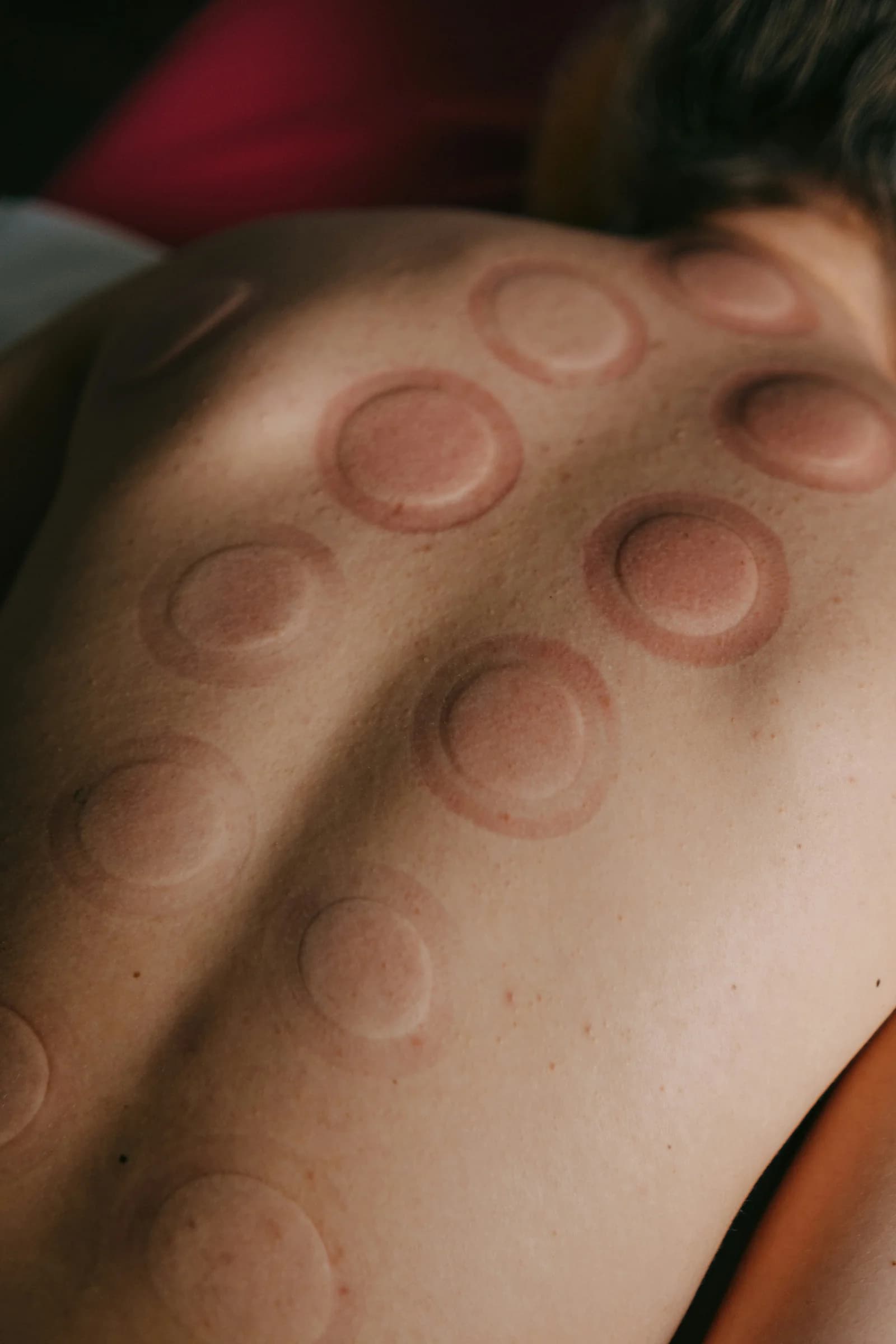
Suction can break tiny blood vessels beneath the skin, leaving circular discoloration. Marks commonly fade within one to two weeks, although timing varies. They aren't a useful scorecard for your results, and their color doesn't establish that toxins have been removed.
If you have a wedding, photographs, or another event where visible marks matter to you, mention it before the session. Ask where cups might be placed and whether another technique would suit your plans better.
Cupping or deep tissue massage
The techniques feel different, and you don't need to declare a winner. With deep tissue work, the therapist applies focused pressure. Cupping uses suction. Your comfort, health history, and reason for booking help guide the choice.
Tell Chris what previous massage felt like and what you want from this visit. If your last session was too intense, say so. If you liked the pressure but want more attention on one area, say that instead. Those details are more useful than asking for whichever technique sounds strongest.
MMI's sessions and pricing page explains the available approaches. Cupping can be part of the visit when useful; it doesn't have to be your reason for booking.
When to check with a healthcare provider first
Discuss cupping with your healthcare provider first if you're pregnant or have a bleeding or clotting disorder. Tell your therapist about medications and skin conditions. Cupping can worsen eczema or psoriasis and can cause burns, infections, or persistent discoloration. Seek medical care for severe pain, burns, fever, or signs of infection after treatment.
What to tell Chris before your appointment
Give a short description of what you're dealing with and what you want to be able to do more comfortably. You don't need an anatomy lesson to explain your own shoulder.
- Where you feel discomfort and how long it has been there.
- Which activities bring it on, such as desk work, lifting, driving, or training.
- Any diagnosis, recent injury, surgery, medications, or restrictions from your healthcare provider.
- Whether you've tried cupping before and how your skin and body responded.
- Whether visible marks or tenderness would interfere with your plans.
If you have several priorities, rank them. 'My shoulders are the main issue; my calves are secondary' helps make the visit more focused than arriving with a list of equally urgent requests.
Booking cupping with a massage in Kansas City
MMI offers individual massage sessions with Chris at 1201 NW Briarcliff Pkwy, Suite 221, Kansas City, MO 64116. All appointments take place at the Briarcliff studio, including visits from clients in Liberty, Gladstone, and Parkville.
You can book a single massage session without a separate program assessment. Mention that you're interested in cupping and describe your main concern. If you're unsure which appointment to choose, call or text 816-935-7288 before booking.
For a recurring issue you want to approach through a defined series of visits, you can also ask about MMI's recovery programs. An assessment starts that conversation; it isn't a requirement for everyone who wants a massage.
Common booking questions
Do I have to be an athlete to try cupping?
No. You can ask about cupping whether your concern involves work, exercise, or everyday activities. Suitability depends on your health history and goals.
Is cupping an extra charge at MMI?
MMI lists cupping among the techniques included when useful for the goal of your visit, without mid-session add-on charges. Check the booking menu for your selected service and duration.
How many cupping sessions should I book?
Don't commit to a series just because you're curious about the technique. Start by discussing your goal and whether cupping fits. Let your response and Chris's recommendations guide the next step.
Ask about cupping at your next session.
Book your massage with Chris, or call with your questions before choosing an appointment.
Book your massage with Chris