Sports massage frequency
How Often Should Athletes Get a Sports Massage?
How often athletes should book sports massage depends on training load, competition timing, and whether you're working on a recurring restriction or maintaining progress.
By Chris Cox, LMTPublished Updated
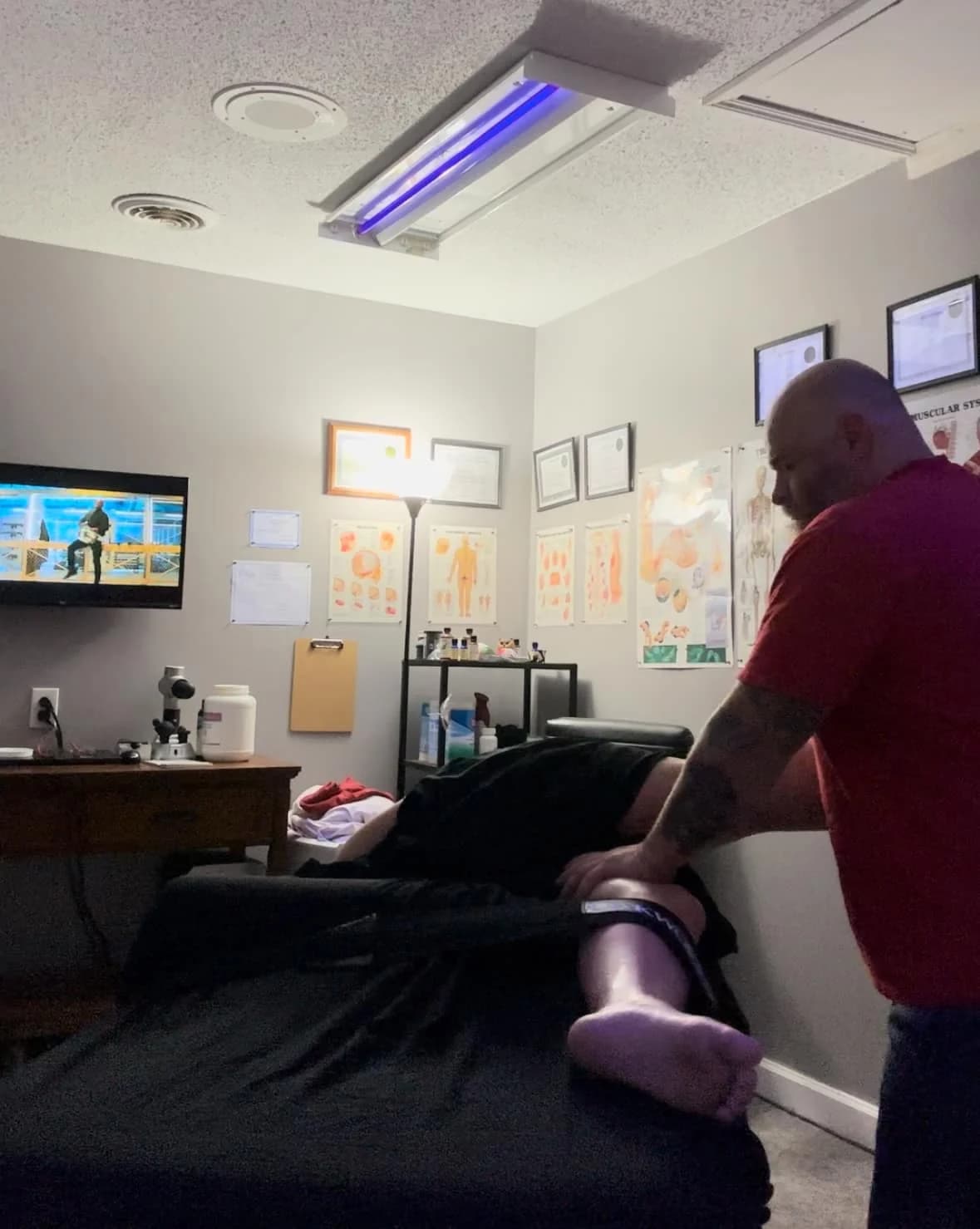
Most athletes need sports massage every two to four weeks during regular training, and every one to two weeks during a heavy competition block or when working through a specific problem area.
If you are training hard five or more days a week, weekly is reasonable. If you are training three days a week and feeling fine, monthly is plenty.
That is the short answer. The longer answer is that "how often" is the wrong question to lead with, and here is why.
Frequency follows the goal, not the calendar
There is a difference between booking massage because it has been a month and booking it because something specific needs to change. The first is a habit. The second is a plan.
When someone comes in with a hip that keeps shutting down their stride, the schedule is not monthly. It is a defined set of visits, close enough together that each one builds on the last, with re-tests to see how the hip moves between visits. The schedule changes with the results.
That is the whole idea behind running structured programs instead of open-ended punch cards: the plan has a finish line, and the visit spacing is part of the plan.
Before asking how often, ask what you want to change. Focused work and maintenance can need different schedules.
What the research actually says
Sports massage gets oversold, so it is worth being straight about the evidence.
A 2020 systematic review in BMJ Open Sport & Exercise Medicine pooled randomized trials on manual massage and athletic outcomes. The finding: no measurable improvement in strength, jump, sprint, endurance, or fatigue, but small and statistically significant improvements in flexibility and delayed onset muscle soreness.
You can read the review here: Effect of sports massage on performance and recovery.
In other words, massage is not going to add pounds to your squat or seconds to your mile by itself. What it can do is help you feel and move better between hard sessions, which matters because soreness and stiffness are what actually derail training consistency. Consistency is where the performance gains live.
Research on delayed onset muscle soreness has also found that massage can reduce soreness after hard exercise. This NIH-hosted study is a useful example: Effects of massage on delayed-onset muscle soreness.
In practice, the best frequency still comes back to training load, competition timing, and whether you are maintaining a body that is already moving well or trying to change a restriction that keeps returning.
A reasonable starting frequency by training load
Use this as a starting point, then adjust based on what your body actually does between visits.
Training 2 to 3 days a week, no specific problem area
Every four to six weeks. This is maintenance. You are checking in, catching tight spots before they become something, and staying ahead of it.
Training 4 to 5 days a week, or in a build phase
Every two to three weeks. Training volume this high generates tissue changes faster than most people's recovery habits can keep up with.
In-season with weekly competition, or a heavy block
Every one to two weeks. This is where the frequency earns its keep. Soccer players managing tournament weekends and rugby players absorbing collisions week over week are dealing with a load that does not reset on its own between matches.
Working through a specific restriction or recurring problem
Weekly, at least at first, for a defined stretch. Then reassess. This is the one case where spacing visits too far apart wastes your money, because you lose the gains between sessions and start over every time.
Lifting heavy, consistently
Every two to three weeks during normal training, tighter around peaking blocks. Strength athletes tend to accumulate restriction in predictable places: hips, ankles, thoracic spine, and shoulders. Those spots are worth staying on top of rather than chasing after they have cost you a lift. The Lifter Recovery program is built around that kind of training rhythm.
Timing around competition
Frequency is one question. Timing is a separate one, and getting it wrong is a common mistake.
Deep, aggressive work the day before a competition is a bad idea. Tissue that just got worked hard can feel sluggish or tender for 24 to 48 hours, and that is not what you want on race morning. Save the heavy stuff for at least three to five days out.
Post-competition is different. Work in the first day or two after a hard effort can help with soreness and getting range of motion back. Lighter and shorter is usually better than deep and long in that window.
If you have never had massage before, do not experiment during a competition week. Get your first session in during a normal training week so you know how your body responds.
Signs you should book sooner than planned
Move your next session up if:
- The same spot keeps tightening and you are stretching it constantly with no lasting change
- Your warm-up is taking noticeably longer than it used to
- You have cut range of motion somewhere and started compensating around it
- Sleep or training quality dropped after a volume increase
- You are guarding an area without quite being able to say what is wrong with it
That last one is worth taking seriously. Guarding is usually the body's early warning, and it tends to show up before pain does.
And a real caveat: massage is not the answer to everything. Sudden severe pain, numbness, tingling, weakness, or anything that feels like a structural injury needs a physician or physical therapist first. Massage therapy is not a substitute for medical care, and a good therapist will tell you when you are in the wrong room.
Why the monthly massage default falls short
A lot of athletes settle into a once-a-month rhythm and stay there for years, feeling good for two days after each one and then back to baseline.
That pattern is not a failure of massage. It is what happens when every session starts from zero. If nobody assessed why the same area keeps tightening up, each visit treats the symptom, and the same restrictions and daily loads can still be part of the picture.
Use a defined set of visits to assess the restrictions, work the pattern, and re-test what changes. Then space maintenance around what held and what your training demands.
If that sounds closer to your situation, start with Athlete Recovery or browse all twelve recovery programs.
Common questions
Can I get a sports massage too often?
Yes. More than about once a week of deep work, without a specific reason, tends to be diminishing returns and can leave you feeling worn down. Frequency should follow load, not enthusiasm.
How long should each session be?
For athletes, 60 minutes is the practical standard, and 90 minutes when there is more than one area to address. Thirty-minute sessions work for focused touch-ups on a single spot. Session lengths and pricing are listed here.
Does sports massage prevent injuries?
The honest answer is that the direct evidence for injury prevention is thin. What regular work does is catch restrictions and asymmetries early, which is a reasonable proxy but not a guarantee.
Is this different from deep tissue massage?
They overlap. Sports massage is oriented around training demands and recovery timing, while deep tissue work describes the pressure and depth. Most sessions for athletes use both.
What about young athletes?
Different considerations apply for growing bodies and multi-sport schedules. Youth Athlete Recovery is handled as its own program with parent involvement.
Where to start
If you are not sure what frequency fits your situation, do not guess at it. Book an assessment. The first visit is a look at how you actually move, what is restricted, and what you want back. You will leave with a straight answer about what is going on and a recommended schedule that matches your training, not a generic one.
Chris Cox, LMT, has 24 years of hands-on work with athletes at the Briarcliff studio in Kansas City North. Every assessment, plan, and session is his own. See all twelve recovery programs or read more answers to common questions.
Need a sports massage schedule that fits your training?
Start with an assessment at Muscle Movement & Improvement in Briarcliff. Chris will look at how you move, what your training asks from your body, and how often hands-on work actually makes sense.
FAQs
Can I get a sports massage too often?
Yes. More than about once a week of deep work, without a specific reason, tends to become diminishing returns and can leave you feeling worn down. Frequency should follow training load, not enthusiasm.
How long should each sports massage session be?
For athletes, 60 minutes is the practical standard. Book 90 minutes when there is more than one area to address, and 30 minutes for a focused touch-up on one specific spot.
Does sports massage prevent injuries?
The direct evidence for injury prevention is thin. What regular work can do is catch restrictions and asymmetries early, which may support better movement, but it is not a guarantee.
Is sports massage different from deep tissue massage?
They overlap. Sports massage is organized around training demands, event timing, and recovery. Deep tissue describes pressure and depth. Many athlete sessions use both.
What about young athletes?
Young athletes need different considerations for growing bodies, parent involvement, and multi-sport schedules. Youth athlete recovery is handled as its own program.